Get the ICP & Target Account Scorecard
- Home
- Resource Hub
- Sales & Pipeline
- ICP & Target Account Scorecard
Stop chasing logos at random. One Excel workbook (opens in Google Sheets) that turns your ideal customer profile into weighted signals, scores every account 0–100, and tiers them A/B/C — so your team works the deals most likely to close first. Built on the method AAJ uses with Seed–Series B teams.
Free. No spam — just the scorecard (and the occasional growth playbook). Unsubscribe anytime.

Six things it does out of the box
Pre-filled with a worked example. Replace the blue cells with your own signals and accounts and the whole workbook — scoring, tiering, disqualifiers, dashboard — recalculates itself.
-
Your ICP, turned into a score
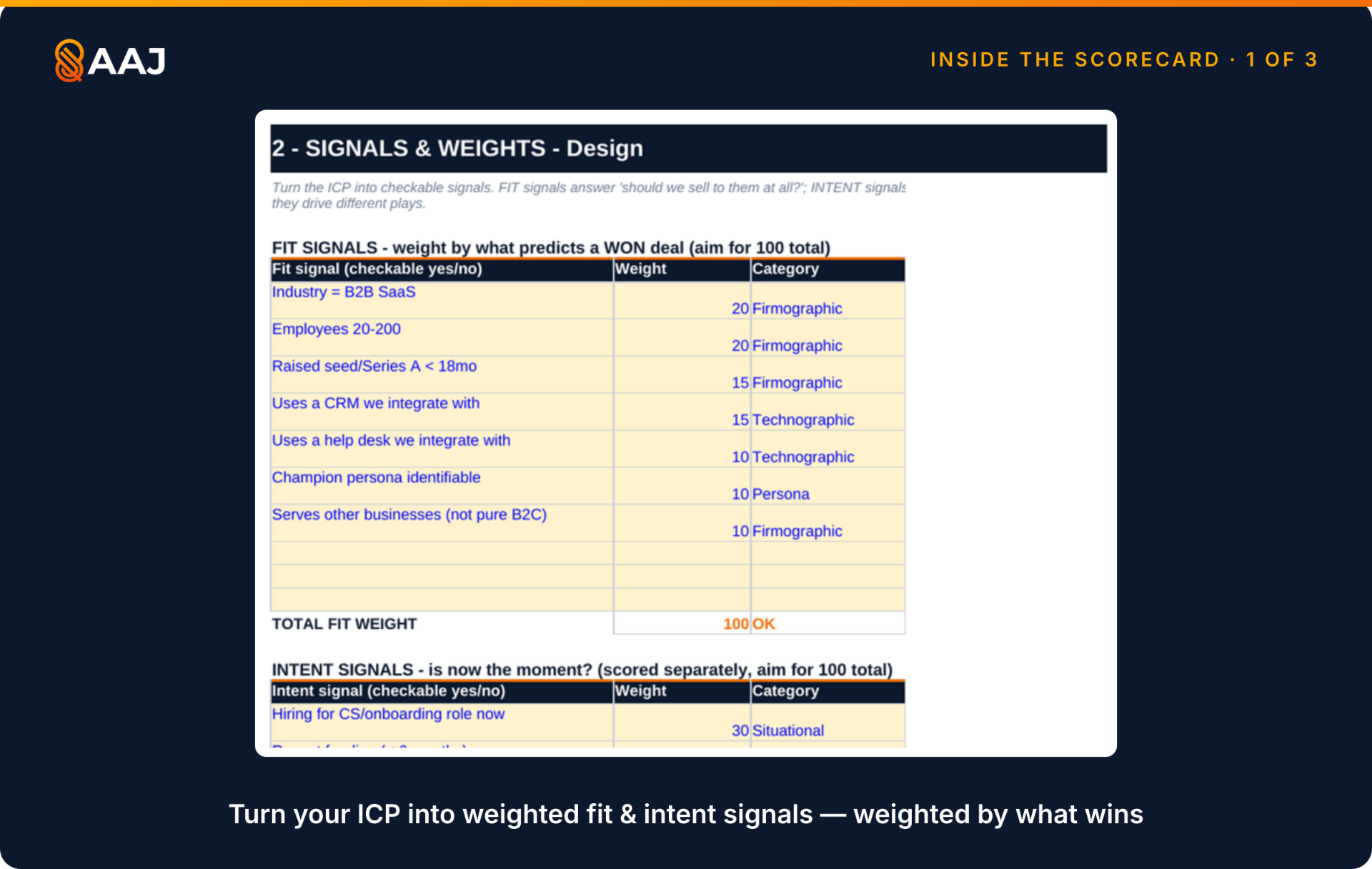
Define the firmographic, technographic, and situational traits your best customers share, then turn each into a weighted, checkable signal. The score isn't a gut call anymore — it's math any rep can trust.
-
Fit and intent, scored separately
Fit answers "should we sell to them at all?"; intent answers "is now the moment?" Keeping them on two axes means a great-fit account that's not in-market becomes a nurture, not a missed call.
-
Auto 0–100 score, tier, and a play
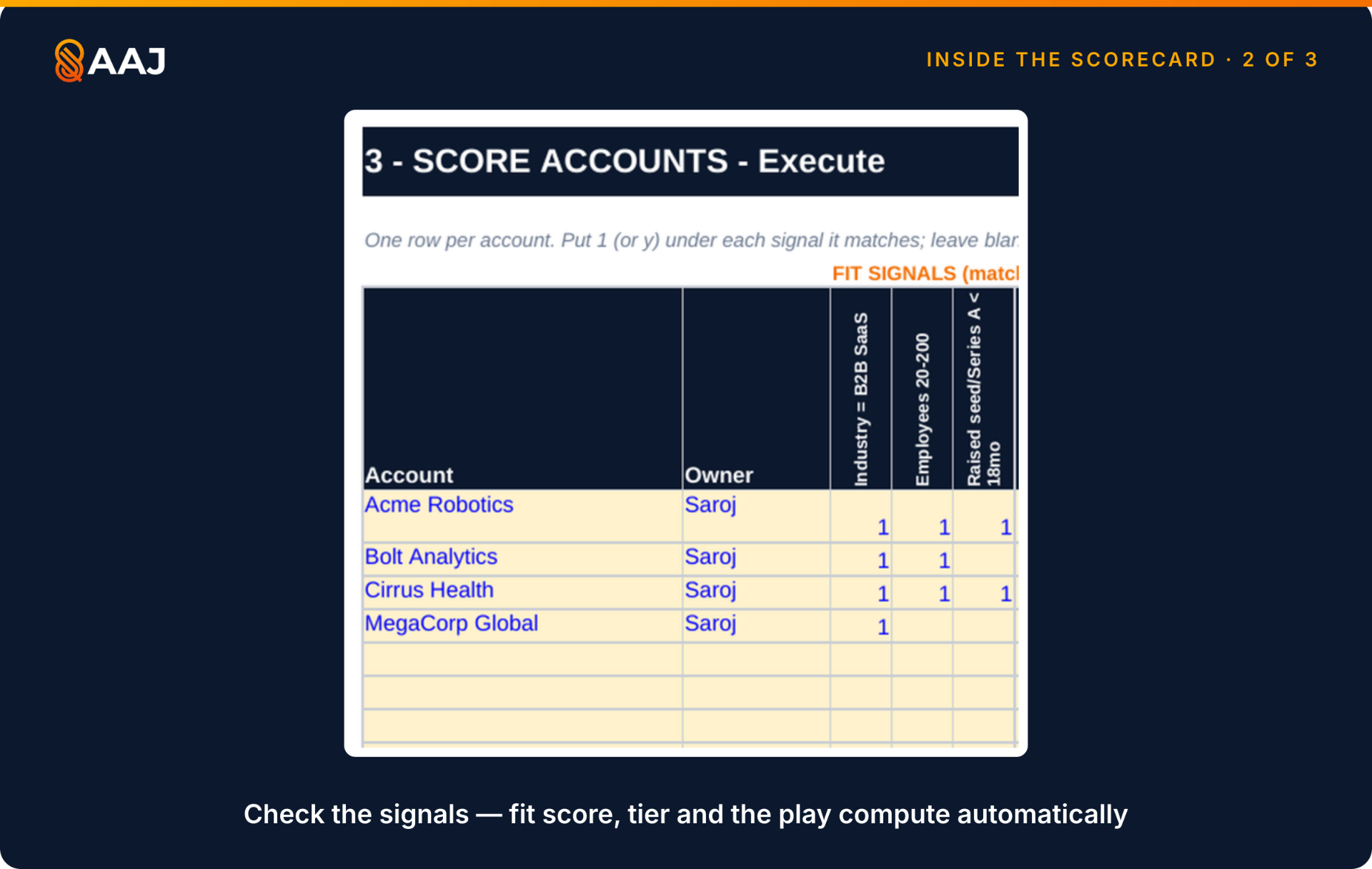
Check the signals an account matches and its fit score, A/B/C tier, and recommended next move compute instantly. Every number traces to the signals you checked — no black boxes.
-
Disqualifiers that cap bad-fit deals
Mark the hard misfits (wrong size, no budget, no relevant motion) and any one of them caps the account, no matter how many other boxes it ticks. The negative-scoring discipline almost nobody runs.
-
A calibration tab that proves the model
Score a few customers you already know. If your best ones don't land in A-tier, the weights are wrong — and the workbook tells you so before you trust it.
-
A dashboard that routes your effort
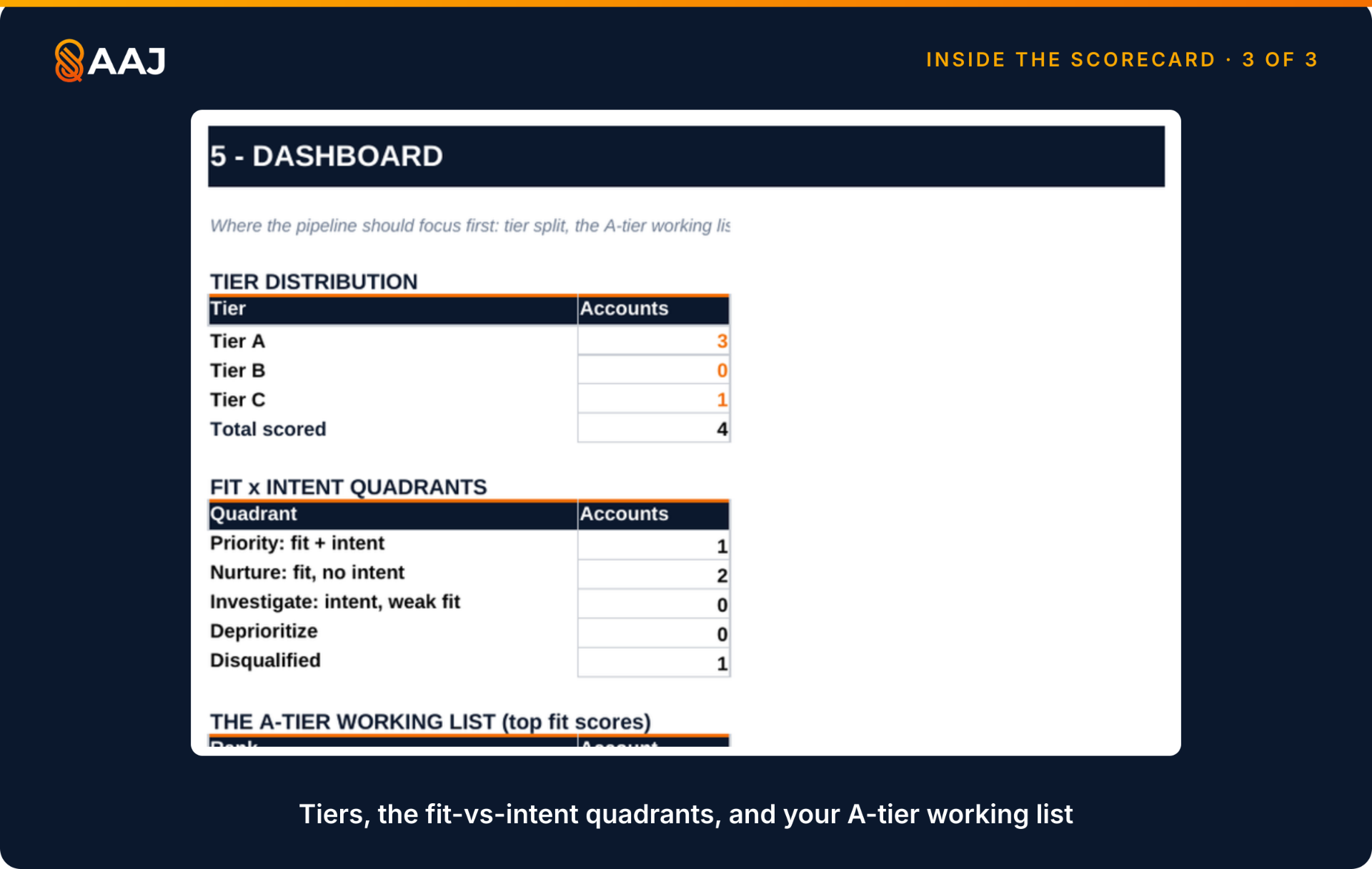
Tier distribution, the fit-vs-intent quadrants, and a ranked A-tier working list that shows exactly where outbound and ABM spend should go first.
Diagnose → Design → Execute
1Diagnose
Describe your ideal customer in plain words — the traits your happiest customers share, and who to actively avoid.
2Design
Turn that into weighted fit and intent signals, weighted by what predicts a won deal.
3Execute
Score your accounts; read the tier and the play, calibrate against known-good customers, and work the A-tier list first.
Founders and early sales or growth hires building an outbound or ABM list
For founders and early sales or growth hires building an outbound or ABM list with far more possible accounts than time to work them. If your reps are chasing logos by gut, if "good fit" means different things to different people, or if you've ever spent a quarter on an account that was never going to close — this replaces the guesswork with a score. Pairs with the Sales Pipeline & Forecast Tracker: this one decides who to pursue, that one forecasts whether they'll close.
Frequently Asked Questions
Common questions about the ICP & Target Account Scorecard.
What is ICP scoring?
ICP scoring assigns a 0–100 score to each account based on how well it matches your ideal customer profile — across firmographic fit (industry, size, stage), technographic fit (their tech stack), and intent signals (hiring, funding, engagement). Unlike lead scoring, which grades individual people on engagement, ICP scoring grades the whole account on structural fit, so your team prioritizes companies worth pursuing rather than whoever happened to fill a form.
What's the difference between fit and intent?
Fit answers whether you should sell to an account at all — its firmographic, technographic, and persona match. Intent answers whether now is the moment — hiring for a relevant role, recent funding, visiting your pricing page. A high-fit, low-intent account is a nurture; a high-intent, low-fit account is worth one call to verify before you invest. The scorecard keeps them on separate axes for exactly this reason.
Does it work in Google Sheets?
Yes. It's an Excel workbook (.xlsx) that opens in Google Sheets via File → Import — the weighted scoring, tiering, disqualifier logic, and the dashboard all work.
How do I know my scoring model is right?
Calibrate it against reality. Score a handful of customers you already closed and love: if they don't land in A-tier, your weights are wrong. The workbook has a dedicated calibration tab that flags this, so you fix the model before trusting it — and you recalibrate quarterly, as accounts and contacts change.
Score your list. Work the winnable deals first.
Forecasting whether they'll close? Get the Sales Pipeline & Forecast Tracker →
What this resource helps you do
Turn your ICP into weighted signals, score every account 0–100, and tier A/B/C — with fit-vs-intent scoring, disqualifiers, and a calibration tab so your team works the winnable deals first.
Get the scorecard from AAJ's free marketing templates library.
More in Sales & Pipeline
Part of the Sales & Pipeline hub - see all 38 resources on this topic.
- Free tool: Battlecard Builder
- AI agent skill: Buying Committee Map
- Article: How to Align Sales and Marketing at a Startup
- Playbook: ICP & Account-Scoring Playbook
Also useful in Audience & Customer Research.